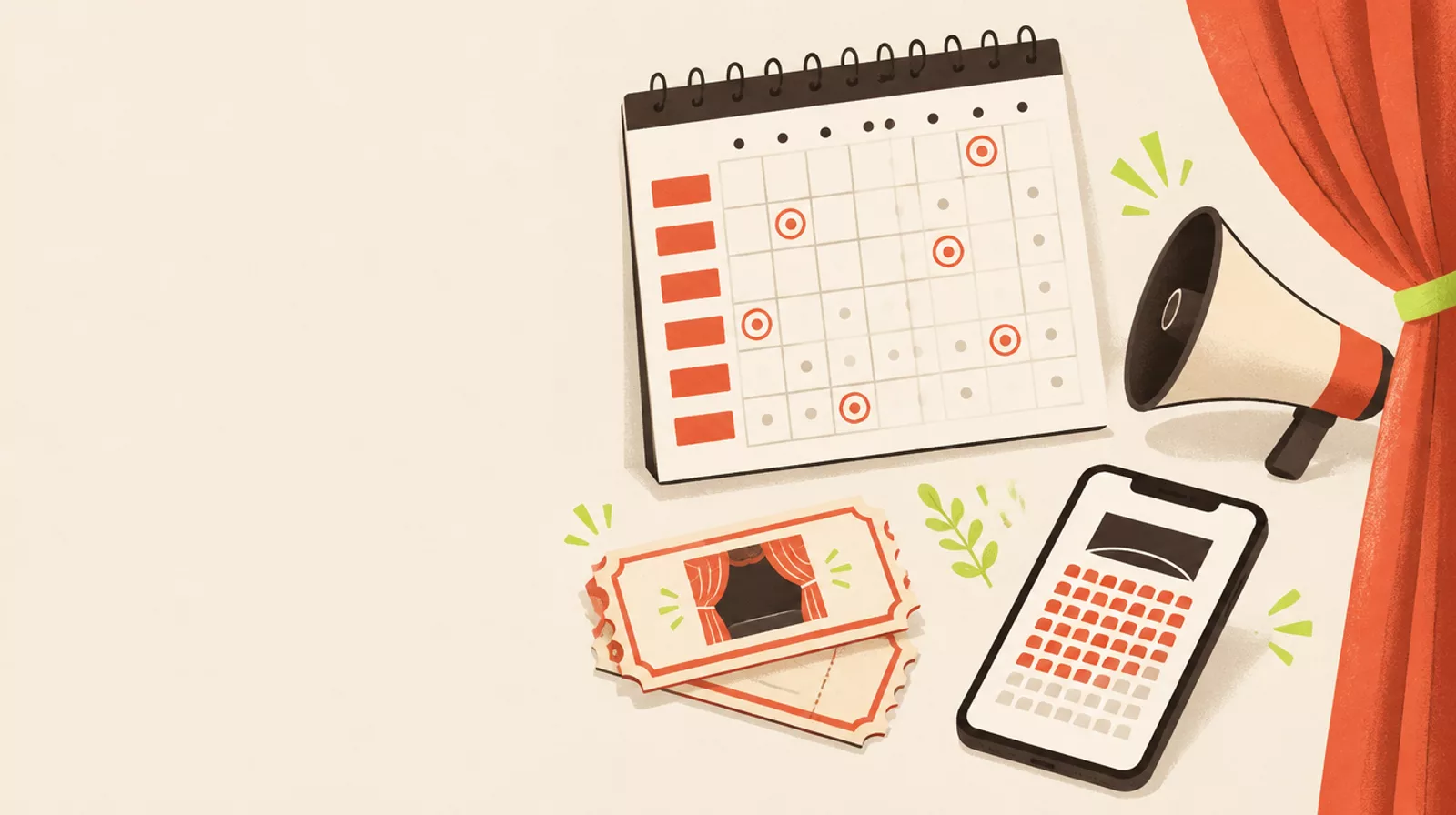
It happens to most societies at some point. The set’s built, the cast know their lines, and two weeks before opening you look at the seating plan and half of it is still empty. It’s rarely because the show isn’t good enough. Usually people just didn’t hear about it in time, or they meant to book and forgot.
Selling out is mostly about starting early and keeping at it. This is the plan we’d follow for a show in a village hall or a town theatre, starting six weeks out, with a few notes at the end on what to do once the curtain has come down.
Before tickets go on sale
Sort these out first, because everything else you do will send people to them.
- Settle your dates, times and prices. Changing them once people have booked means refunds, extra emails and a confused audience.
- Check the booking page on your phone, because that’s how most people will book. They should be able to pick their seats and pay without setting up an account.
- Write a decent description of the show: what it’s about, who it suits, how long it runs, and anything people might want warning about, like strobe lighting or strong language.
- Get the artwork done. You’ll need a portrait poster and a landscape version for Facebook and your website, and you’ll be using both for the next six weeks.
- Put the access details where people can see them: parking, step free access, wheelchair spaces and the hearing loop. Anyone who needs that information won’t book until they’ve found it.
Six weeks out: let your members book first
Open booking to members and your regular audience a few days before anyone else. They tend to book straight away, so you’ll have seats sold before the public launch, and they’ll start telling people about the show. You don’t need anything clever for this, just a booking link that only goes to them.
Five weeks out: launch day
Open booking to everyone, and try to do all of this on the same day so people see the show in several places at once.
- Email everyone who has booked with you before. Keep it short: the poster, the dates and a booking button. This will probably sell more tickets than anything else you do.
- Post it on your social media pages, then ask everyone in the cast and crew to share it. Their friends and families will buy more tickets than any other group.
- Give each cast member their own booking link so you can see who has sold what. A bit of friendly competition goes a long way, especially if you share the totals in the cast group chat.
Three to four weeks out: get the word out locally
Now it’s time to reach people who haven’t been to one of your shows before.
- Send a short press release and a good photo to the local paper, local radio and any community magazines. Add the show to the free what’s on listings too.
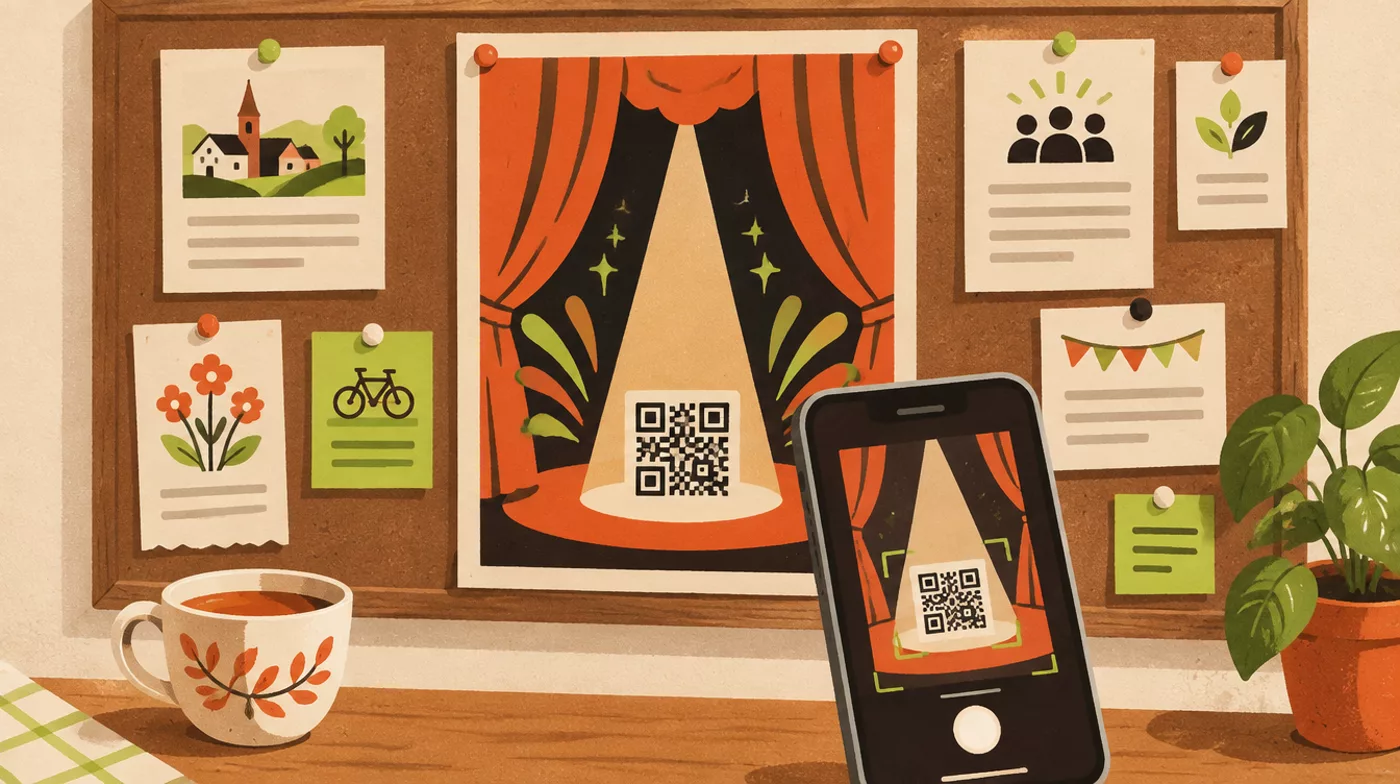
- Put posters up in the library, shops, cafés, the community centre and anywhere else with a noticeboard. Add a QR code that opens the booking page. If you give each poster its own link, you’ll find out which ones actually sold tickets.
- Get in touch with schools, choirs, the U3A, sports clubs and churches. Most of them have a newsletter, and a group discount can fill a whole row at once.
- Share photos and short videos from rehearsals. They keep the show in people’s feeds and give the cast something new to post.
Two weeks out: give people a reason to book now
Lots of people fully intend to come and just haven’t got round to it. A little urgency helps.
- Tell people how it’s selling. A post saying Saturday is 75% sold works better than almost anything else, and it nudges people towards the nights that still have room.
- Work on the quieter performances. Matinees and midweek nights are often slow, so aim those at families, older audiences and groups.
- Ask members and cast to bring along someone who has never seen one of your shows.
The final week
- Send a last chance email and post for any night that still has seats.
- Keep a waiting list for the nights that have sold out. Someone always drops out, and if you can offer their seat to the next person straight away it won’t sit empty.
- Get the door sorted. Have a card reader for people who turn up on the night, a printed list of bookings in case the WiFi drops, and enough volunteers to keep the queue moving.
After the show
The week after you close is when you start winning the audience for the next one.
- Thank everyone who came. Send a couple of photos and the dates of your next production while people are still talking about this one.
- Ask for reviews. A few kind words from real audience members will do more for your next show than anything you write yourselves.
- Write down what worked while you still remember it: which cast member sold the most, which posters brought in bookings, and which nights were quiet. That’s the start of your plan for next time.
TheatreHQ can do a lot of this for you. You can send early booking links to members, give the cast and your posters their own referral links, send email campaigns to past audiences, let people know automatically when a show is 50%, 75% or 90% sold, run waiting lists for sold out nights and scan tickets on the door with the scanner app. There’s no fee on any ticket you sell.